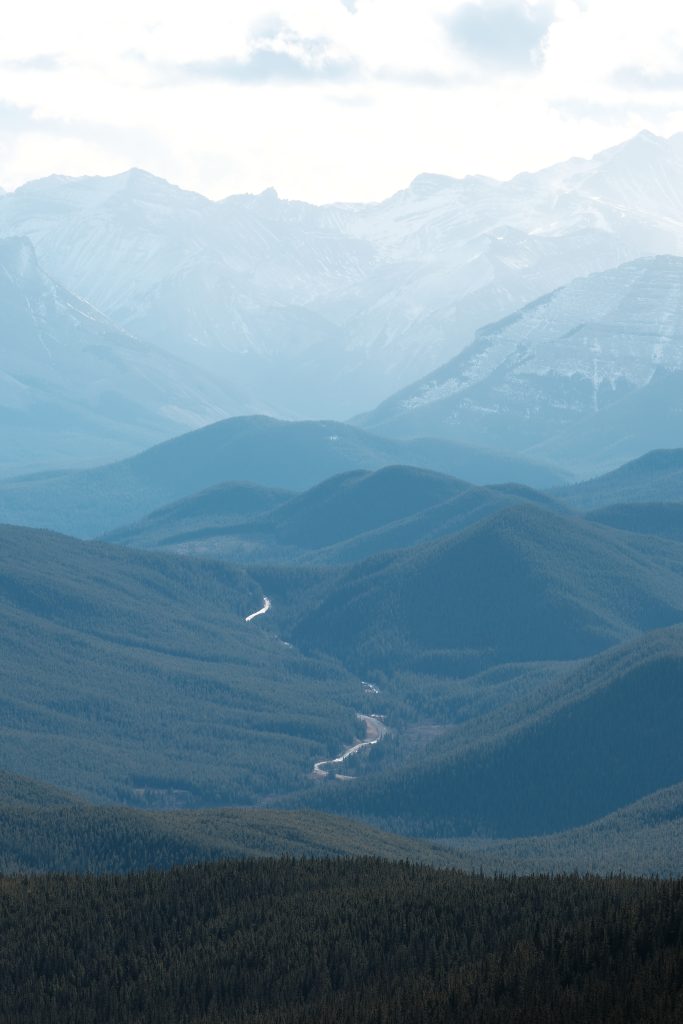
Winter hiking in Kananaskis Country offers incredible snow-covered landscapes, frozen lakes and quiet mountain trails. Below are some of the best winter trails in Kananaskis, ranging from easy forest walks to moderate summit hikes, all perfect for winter.
You may also be interested in our hiking guide of the Rockwall Trail in Kootenay National Park.
Kananaskis Pass
Before heading out to explore these winter hiking trails, it’s important to note that a Kananaskis Conservation Pass is required for all vehicles parking within Kananaskis Country and the Bow Valley Corridor. The pass helps support conservation efforts, trail maintenance, wildlife protection, and visitor safety across the region. You can purchase a daily or annual pass online in advance or on the day of your visit at visitor centres. It must be valid for the entire duration of your stay. The licence plate of your vehicle will be used to verify your pass purchase during your visit. Enforcement is in place year-round.
Black Prince Trail (Black Prince Cirque Interpretive Trail)
- Difficulty: Easy-moderate
- Distance: 4.2km
- Elevation gain: 157m
- Multi-use trail: Hiking, snowshoeing, backcountry skiing
- Facilities: Parking and outhouses available at the trail head
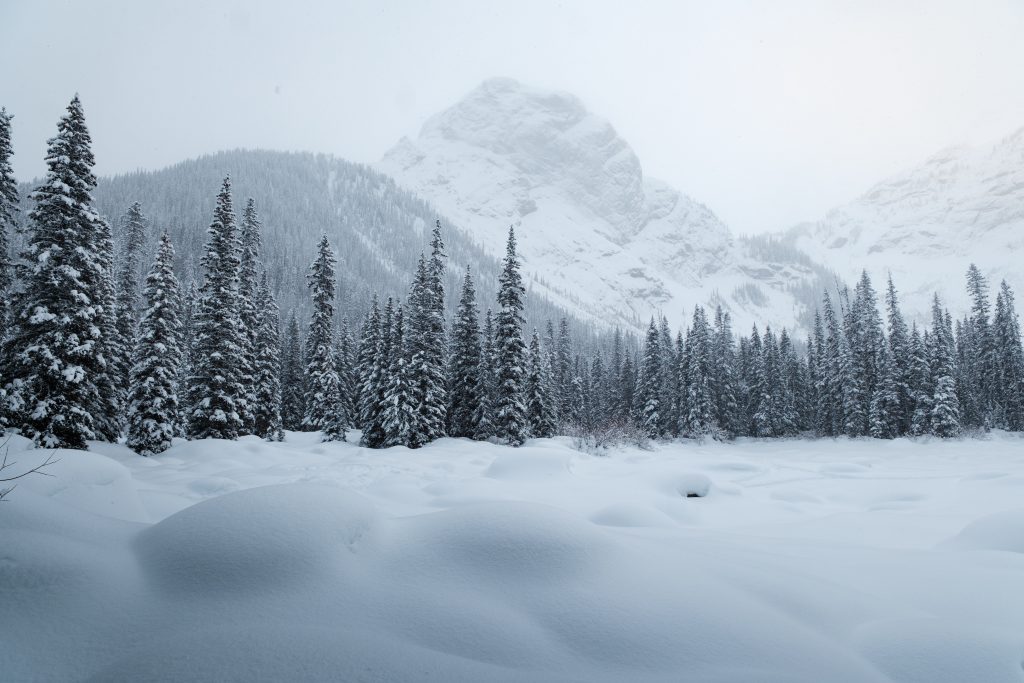
- Overview: The trail travels mostly through forest and ends at Warspite Lake, offering beautiful views of the Black Prince Cirque. A heavily used winter trail that is usually well packed, even after heaving snowfall. Be aware of avalanche terrain if you plan to travel beyond the lake.
The Black Prince Trail is a beautiful out and back winter hike that winds through forest before opening up at Warspite Lake with stunning mountain views. The trail begins relatively flat, crossing Smith-Dorien Creek, before transitioning into a mostly moderate uphill walk to the lake.
As you hike, you’ll pass through dense coniferous forest with occasional glimpses of the surrounding peaks. Around 3.5km in, the trail splits to form a loop near the lake, although the right branch is typically the only one well used. Once you reach the lake, the forest opens up to reveal incredible views, including Mount Black Prince towering above.
Because the trail is popular, it is usually well trodden and packed down. Snowshoes are generally not required unless you plan to walk around the edge of the lake or explore the lesser-used left branch of the loop. We recommend wearing spikes instead.
Burstall Lakes
- Difficulty: Easy
- Distance: 8.9km
- Elevation gain: 246m
- Multi-use trail: Hiking, snowshoeing, backcountry skiing
- Facilities: Parking and outhouses available at the trail head
- Overview: A quieter winter hike that leads mostly through forest with openings near the lakes and beautiful views of the surrounding mountains. Be mindful of avalanche terrain if you continue beyond the lakes.
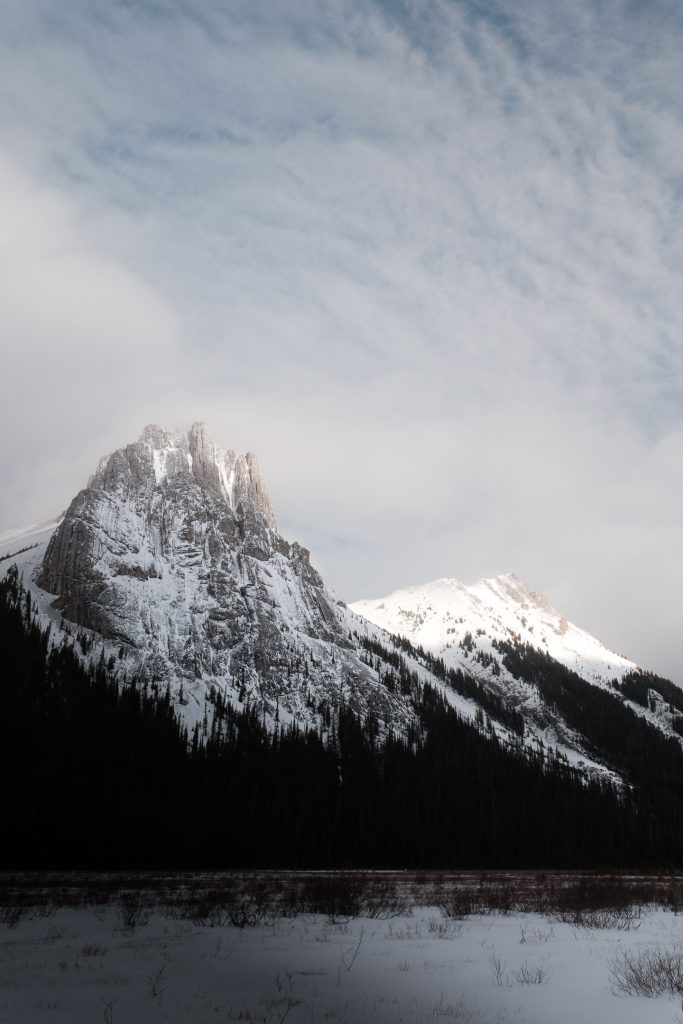
The Burstall Lakes Trail is an out and back winter hike with a steady incline through forest. A side path leads down to the third lake at about 3km in, where you’re rewarded with stunning views of Commonwealth Peak and Mount Birdwood.
If you continue along the main trail past the third lake, the route becomes icier in places as it descends through denser forest. We recommend continuing until you reach an opening to a meadow, where the trail splits and connects with the Commonwealth Peak Route. This is a great turnaround point, offering fantastic open views of the valley and surrounding mountains.
This trail is much quieter than others on this list, so snowshoes may be needed after heavy snowfall. We hiked it in early winter and the snow reached the top of our winter boots in some sections.
Chester Lake
- Difficulty: Moderate
- Distance: 7.6km
- Elevation gain: 409m
- Multi-use trail: Hiking, snowshoeing, backcountry skiing
- Facilities: Parking and outhouses available at the trail head
- Overview: A very popular winter trail that climbs through forest and opens into a stunning alpine meadow before reaching Chester Lake with incredible views of the surrounding mountains.
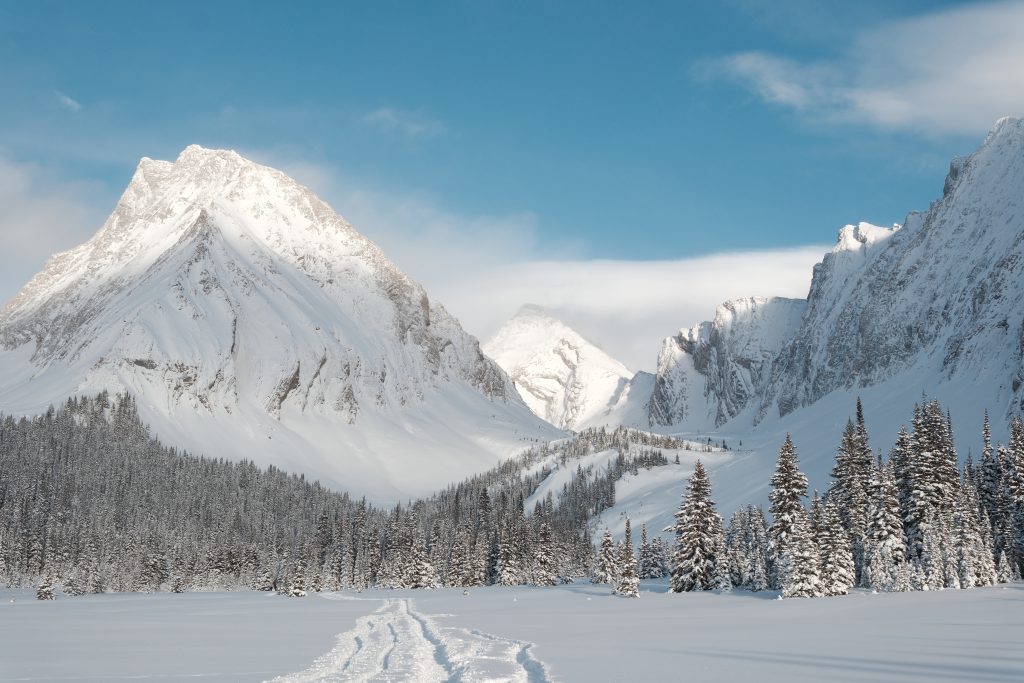
The Chester Lake Trail is popular for good reason, it is insanely beautiful, especially on a clear winter day when the landscape feels like a true winter wonderland. We recommend bringing snowshoes or spikes, particularly if there has been recent snowfall. While the trail is often well packed, snow can be very deep in places and just off the trail.
The route begins with a steady climb through forest for approximately the first 2.8km. Some sections become fairly steep, which can be tricky in winter conditions. After this, you’ll reach an open meadow where the trail levels out, and the climb feels well worth it thanks to the fantastic views.
Continue along the trail for about another kilometre to reach Chester Lake, with incredible views up to Mount Chester. The trail sees winter use from hikers, snowshoers and backcountry skiers alike. There is a separate snowshoe/hiking trail to the ski trail, so make sure you use this one.
Rawson Lake
- Difficulty: Moderate
- Distance: 7.1km
- Elevation gain: 526m
- Multi-use trail: Hiking
- Facilities: Parking and outhouses at the trailhead at Upper Kananaskis Lake.
- Overview: The trail passes Upper Kananaskis Lake before climbing through dense forest to the frozen Rawson Lake, with beautiful views of Sarrail Ridge. A well-packed trail with a moderate incline leading to the lake. Expect very cold temperatures once you reach the lake.
The Rawson Lake Trail is a fantastic winter hike that gets the heart pumping and delivers big rewards at the end. The trail starts along the shoreline of Upper Kananaskis Lake, offering beautiful views, before splitting just over 1km in and climbing toward Rawson Lake.
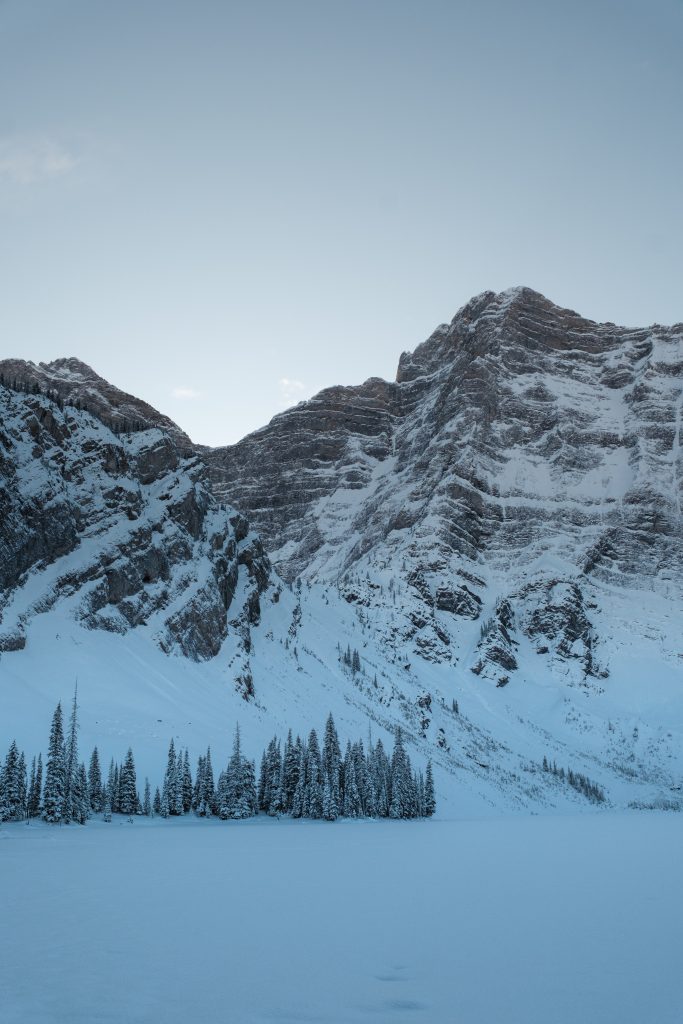
From here, the trail steadily ascends through forest with a moderate incline. It is typically well trodden in winter, but we recommend wearing spikes and bringing hiking poles. At the end of the trail, you’re rewarded with views of a stunning glacial basin, with Rawson Lake frozen beneath the towering cliffs of Mount Sarrail.
Mount Lorette Ponds
- Difficulty: Easy
- Distance: 1km
- Elevation gain: 30m
- Multi-use trail: Hiking
- Facilities: Parking and outhouses available, as well as picnic tables and fire pits
- Overview: A short and easy trail that loops around Mount Lorette Ponds, offering peaceful views of the surrounding mountains, forest and wetlands.
The Mount Lorette Ponds Trail is more of a gentle walk than a traditional hike, making it ideal for families, beginners, or anyone looking for a relaxed winter stroll in Kananaskis Country. The well-maintained loop circles the pond, where you can enjoy scenic views of the forest and nearby mountains.
This area is also a great spot for wildlife viewing, and you may be lucky enough to spot birds or animals making use of the wetlands. With minimal elevation gain and excellent facilities, Mount Lorette Ponds is a perfect stop for a quick walk, picnic, or peaceful break during a day exploring Kananaskis.

Jumpingpound Mountain (bonus hike only accessible before December)
- Difficulty: Moderate
- Distance: 6.3km
- Elevation gain: 414m
- Multi-use trail: Hiking
- Facilities: Parking on the road, no outhouses
- Overview: NOTE: The trail is only accessible at the start of winter, as the road to the trailhead is closed between December and May. An out and back hike leading through forest to the summit of Jumpingpound Mountain, with sweeping 360 degree views of the Rocky Mountains, foothills and prairies.
The Jumpingpound Mountain Trail is a great hike that leads to one of the most unique viewpoints in Kananaskis Country. The trail climbs steadily through dense forest for approximately 2.5km. Once you break out of the trees, you’ll catch your first sight of the expansive views ahead.
At the summit, you’re rewarded with a full 360-degree panorama stretching from the Alberta prairies, across rolling foothills and to the dramatic wall of the Rocky Mountains. Unlike many other summits in Kananaskis, JumpingPound Mountain is very accessible and feels more like walking up a large hill than a technical mountain ascent.
One thing to be aware of is the wind – it can be incredibly strong near the summit. We recommend bringing spikes, hiking poles and a wind proof jacket to stay comfortable and safe.