Utah is an intriguing and unique state. A striking contrast of arid desert and snow capped mountains. On top of this, it is home to some of the most incredible geological wonders including deep canyons and otherworldly rock formations. With so much to see and do, Utah is a true playground for outdoor adventurers.
This 10-day itinerary takes you through Utah’s ‘Mighty Five’ national parks: Arches, Canyonlands, Capitol Reef, Bryce Canyon and Zion. Along the way, you’ll wander through towering red rock monoliths, explore sweeping canyon vistas and hike through dramatic slot canyons. We’ve also included tips on scenic drives, viewpoints not to miss, and the best short hikes for making the most of your time.
We took this trip in April as part of a longer US road trip through Nevada, Arizona, Utah, Wyoming and Montana. If you’re curious about that journey, you can check out our full itinerary here.
Check out our other USA itineraries for more inspiration:
- USA National Parks Road Trip Itinerary – Mountains, Deserts & Wildlife – Covering 6 States And 9 National Parks
10 day Montana road trip itinerary: Yellowstone, Glacier & the Wild West
When is the best time to visit Utah?
The best time to visit Utah depends on your interests, but for this itinerary we recommend visiting in late April to mid-June or September to mid-October. These times of the year offer mild temperatures and fewer crowds than visiting during the peak summer months. We took this trip in April where we experienced warm, sunny days, but cold nights.
How to get to Utah?
Fly:
If you are flying into Utah, the best option for this itinerary is to take a round trip flight to Salt Lake City. This offers the most national and international flights in the region. From the airport you can rent a car, which you’ll need for this itinerary. For this itinerary a 4×4 isn’t necessary, but a vehicle with high clearance is recommended.
Drive:
If you are driving into Utah you can skip Salt Lake City and start in Moab or do the itinerary in reverse and start in Zion.
Where to stay in Utah?
As this itinerary covers a large area, we recommending staying near each national park. We’ve included accommodation options for each day below.
Important information for visiting Utah national parks:
National Parks entry pass:
You need a pass to enter each national park. You can purchase separate passes for each park which costs $35 and covers a vehicle and its passengers for up to 7 days. Our recommendation is to buy the America the Beautiful Annual Pass which covers entrance to all national parks for a year for $80. Seeing as this itinerary covers 9 national parks, the America the Beautiful Pass makes total financial sense. These can be purchased at national park entrance gates or online.
Additional reservations for national parks:
Arches National Park requires a timed entry ticket between April and October. The park releases these up to 6 months in advance on a first-come, first-served basis. They can be purchased online here.
Zion National Park shuttle bus:
Fom March through late November, the Zion Canyon Scenic Drive, is only accessible via a free shuttle bus. You can catch the shuttle from the visitor centre and there are buses leaving every 5 minutes so you shouldn’t have to wait long for one, the only thing you need to take into consideration is that parking at the visitor centre fills up usually by around 9am which means you then have to find parking elsewhere. There are a few small pullovers down the road from the visitor centre which you can park at if there’s room otherwise you’ll need to park in Springdale with some places charging $40 for the day and you will have to catch another bus to the visitor centre.

Day 1: Arrive in Salt Lake City and drive to Moab
Arrive in Salt Lake City preferably in the morning and once you’ve picked up your rental car begin the approximately 4-hour drive to Moab. Moab is the gateway to both Arches and Canyonlands national parks making it the perfect place to base yourself for 3 nights as you explore these parks.
Whilst Moab is known as the adventure capital of Utah, it is also a little artsy oasis in the desert. Once you arrive, spend some time exploring the city centre checking out the independent shops selling local arts and crafts, outdoor clothing and equipment, and unique gifts. We particularly liked browsing Moab Made which showcases local artists work.
For dinner, there are many restaurants to choose from or head to the Moab Food Truck Park, an outdoor dining area with a selection of casual eats ranging from Latin American, Mediterranean to Asian cuisines.
There are lots of accommodation options in and surrounding Moab, but we found that they do come with quite a hefty price tag. Because of this, we decided to stay 40 minutes out of town near La Sal at a bed & breakfast called Mount Peale Country Inn for a fraction of the price. Our room was cosy and spacious and the included breakfast was plentiful, but if you’d rather not spend 40 minutes driving to and from Moab for 3 nights (which was quite tedious), then check out what is on offer in town. There are also a few campgrounds located near to town, as well as in the national parks themselves.
Night 1: Moab
Day 2: Arches National Park
Day 2 will be spent exploring Arches National Park, located just 10 minutes outside of Moab. Entry to the park requires purchasing a timed entry reservation, as well as the park entrance fee. This must be booked in advance. It’s also worth nothing that there are no facilities to buy food or water in the park, so it you plan on spending a full day there, make sure to pack lunch, snacks and plenty of water.
Arches is home to over 2,000 natural stone arches and hundreds of other dramatic rock formations, making it one of the most unique landscapes in the U.S. A scenic drive winds through the park, taking you to different areas where you can stop at overlooks, explore short walking trails, or set off on longer hikes.
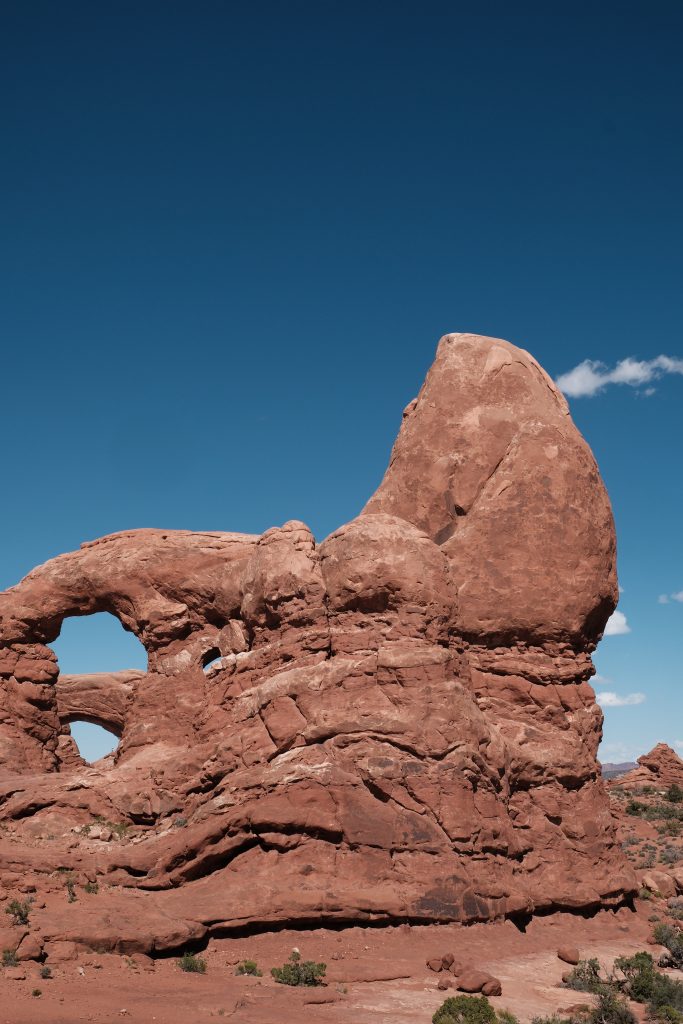
First, make a stop at the visitor centre for information about the different areas of the park and hiking trails and to check out the gift shop. Then, begin the scenic drive into the park. There will be lots of places to pull over and take in the scenery. Make a stop at the Courthouse Towers, a collection of impressive tall stone columns. There is an observation point or you can walk among the massive monoliths down Park Avenue trail.
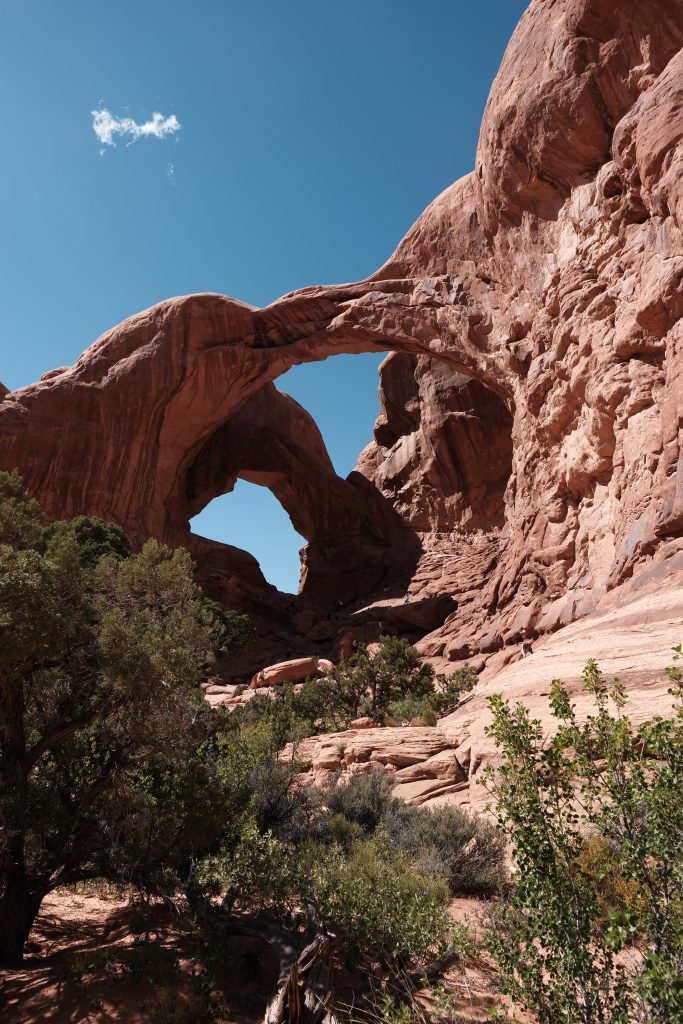
Continue driving along the road, where you will pass the Petrified Dunes Viewpoint and Balanced Rock – also worth a stop. Next, head to the Windows Section where you will find some of the largest and most famous arches in the park. Here you can walk to Turret Arch, North Window Arch, and Double Arch (our personal favourite). The trails are fairly easy and short, though there are some steps and uneven terrain and it can get very hot. We spent about 90 minutes exploring this area on foot.
Next, make your way to the Devils Garden section. This area is absolutely beautiful and less crowded than some of the others. One of the highlights here is Landscape Arch, the longest natural arch in North America. The hike from the trailhead to Landscape Arch took about 30 minutes each way. The trail is mostly flat, again with some rocky and uneven sections.
Later, drive over to Wolf Ranch, the starting point for the hike to Delicate Arch, the most famous and photographed arch in the park. It’s also the largest free-standing arch in the park. The trail to Delicate Arch is about 3 miles roundtrip and involves a climb of approximately 480 feet. If you’re not up for the full hike, there’s also the option to view it from a distance at the Lower Delicate Arch Viewpoint.
To wrap up the day, head back into Moab for dinner and a stroll around town. Moab has a creative, artsy vibe with plenty of independent stores, coffee shops, and local restaurants.
Night 2: Moab
Day 3: Canyonlands National Park
Day 3 is dedicated to exploring Canyonlands National Park. If you’ve visited the Grand Canyon, then you may be wondering whether you need to see another canyon, but this park is genuinely surprising. It’s not just canyons; the landscape here has been carved out by the Colorado River to feature arches, buttes, hoodoos and other geological formations.
Like Arches National Park, there are no food or drink services available, so we recommend bringing what you need for the day with you. We also suggest staying in the park for sunset, so you may want to consider bringing dinner with you.
Canyonlands spans a vast area, much of it being pure rugged wilderness only accessible by a 4×4 or multi-day hiking. The park is divided into four distinct districts: Island in the Sky, The Needles, The Maze and The Rivers. Each area offers a completely different experience, and you could easily spend several days exploring them all. Since only one day is designated to Canyonlands in this itinerary, we recommend choosing the Island in the Sky district to explore as this is the most accessible from Moab and ideal for a day trip.
The Island in the Sky entrance is about a 40-minute drive from Moab, and once inside, you will be treated to a wide variety of incredible viewpoints and hikes. Similarly to Arches National Park there is a paved scenic drive, that takes you to these viewpoints and park features.
First, check out the visitor centre on your way in. Then head to the dramatic Shafer Canyon Overlook and then on to the iconic Mesa Arch. The view through the arch overlooks the canyon below and out to snow covered mountains in the distance.
From here, take the road to the furthest point south where you will reach Grand View Point Overlook. We recommend walking the 1km trail to the very end for the best view. The trail is mostly flat with some steps and uneven surface. The trail leads you along the white rim, where down below you can see hundreds of hoodoos. The view at the end of the trail offers an expansive view across Canyonlands where you can see some of the other districts. It took us just over an hour to hike the trail, plus time to take in the view.
Once you have finished at Grand View Overlook, drive back to the farthest point north where you will reach Upheaval Dome. A short walk up an incline takes you to the first overlook of the dome – a mysterious 3 mile wide crater which scientists aren’t quite sure of its formation. There is a second overlook further along the trail if you wish to continue walking.
To finish the day, head to Green River Overlook for sunset. A short paved path leads to a spectacular vista point overlooking a vast plateau deeply chiseled by the Green River. At sunset, the landscape turns shades of gold and fiery orange. It was one of the best views we had of this entire trip.
Night 3: Moab


Day 4: Capitol Reef National Park
The next day, begin with a slow morning in Moab. Grab breakfast and coffee before heading out on the road. The drive to Capitol Reef National Park takes around 2 hours. Driving along Route 24, you really feel like you’re heading into the middle of nowhere. The landscape is dry, vast and eerily empty – we barely passed another car the entire way. It’s only as you approach Capitol Reef that the scenery changes dramatically, revealing an unexpected oasis of sandstone domes, lush vegetation and green valleys.
Like Canyonlands, Capitol Reef spans a huge area and has three distinct districts. The northern Cathedral Valley District is a remote rugged region which requires some planning and at least a full day to explore. Similarly, the southern Waterpocket District is fairly remote and rugged and requires at least a day to visit. The Fruita Historic District is considered the heart of the park and is much more accessible particularly if you have less time.
What makes Capitol Reef unique compared to the other parks and what we liked about it, is this historic centre. This area has been inhabited for thousands of years, and you can still see ancient petroglyphs carved into the red rock walls. Fruita is also home to historic orchards planted by Mormon pioneers who once lived here and it feels like a little oasis amongst the surrounding towering red rocks.
Check out the old schoolhouse and Fruita Barn for a step back in time, as well as the Gifford House and Museum Store where you can pick up a few baked goods. Then take the 7.9 mile scenic drive, which winds through narrow canyons and past striking rock formations and gorges. Much of the drive is paved, but there are some additional roads which take you deeper into canyon areas which are not paved. You don’t need a 4×4, just drive slowly and watch for large rocks and pot holes. Spend the day exploring this area, pulling over along the scenic drive to take in the incredible views or hiking further into the landscape.
For sunset, head to the aptly named Sunset Point for a spectacular view across the Fruita district.
Just 15 minutes drive, is the nearby town of Torrey, which offers a range of accommodation options for a good nights rest. There are also a number of restaurants in town where you can get dinner.
Night 4 : Torrey


Day 5: Bryce Canyon National Park
From Torrey, make your way towards Bryce Canyon National Park via Escalante, taking Route 12. The drive takes just over two hours without stops, but you’ll definitely want to take your time. Known as the ‘Journey Through Time Scenic Byway’, Route 12 offers incredible views of red rock cliffs, dramatic plateaus, winding canyons and expansive valleys. It’s the only road we’ve ever driven where, at one point, you’re literally on a mountain ridge with drops on both sides. There are plenty of designated pull-offs along the route for photo opportunities and if you’re keen to stretch your legs, there are various hiking trails ranging from easy strolls to more challenging hikes. We stopped several times along the way and also paused at Lower Calf Creek Falls for a picnic lunch.
Arriving at Bryce Canyon National Park in the early afternoon will give you plenty of time to see all the viewpoints and go on a hike. As usual, make a stop at the visitor centre before heading out to the park’s viewpoints. Bryce is known for its spire-shaped rock formations called hoodoos that blanket the landscape, with clusters of trees filling in the valleys. The contrast in colours between the bright orange rock and the dark green trees is fantastic. It really is one of the most beautiful parks. Which is probably why it was also the busiest national park we had encountered so far (until Zion) even on a weekday, and parking at some of the popular points was tricky.
Stop at Bryce Point for your first view across the canyon, then head to Sunrise Point to begin the Navajo Loop Trail and end at Sunset Point. We recommend choosing this trail for your hike as it winds down into the canyon so you can walk among the towering hoodoos for a different perspective. It took us just under two hours to complete the trail, with lots of stops for photos, and while the trail is fairly steep going in and out of the canyon, it’s otherwise an easy walk.
For sunset, make your way to Inspiration Point and watch the hoodoos illuminate in the setting sun.
We stayed the night in Bryce Canyon City, just outside the park gates. There are plenty of accommodation options in the area, ranging from motels and lodges to campgrounds and cabins. There are also a few restaurant options.
Night 5: Bryce Canyon City


Day 6: Zion National Park
Day 6 and you are onto the last national park in Utah: Zion National Park, where you’ll spend the next 3 days. The drive from Bryce Canyon to Zion’s east entrance takes just under 1.5 hours. Along the way you may want to make a quick pit stop in Orderville to stock up on food and water for the next few days. Alternatively, Springdale is located adjacent to the park’s west entrance and has a good selection of shops and restaurants.
Zion was the first park we had to wait in a line at the entrance gate and this was the case over the next 3 days as we entered back into the park, with the exception of when we arrived in the park at 6am – that time we breezed through the gates. Other than how busy Zion was, wow. While every national park we’d visited so far had been insanely beautiful, Zion felt like something else entirely. Yes, it features more rock formations, but Zion offers towering stone walls, narrow river canyons and a valley full of life. If it’s your first time visiting Zion, we highly recommend entering through the east gate, then as you drive through the Zion-Mount Carmel Tunnel, you’ll be hit with a dramatic reveal of the valley that quite literally gives you goosebumps and makes you feel like you’ve stepped into a scene from The Land Before Time.
For your first day in Zion, explore Zion Park Boulevard to get a feel for the park. Stop at sights like Checkerboard Mesa, a massive, patterned sandstone summit and Keyhole Canyon, as well as all the viewpoints, particularly as you come out of the Mount Carmel Tunnel. If time allows, also checkout the Zion Human History Museum and of course the visitor centre.
Later, head into Springdale to pick up gear for hiking The Narrows the following day. The Narrows, as the name suggests, is the narrowest section of Zion Canyon and arguably one of the most unique hikes in the world. This hike takes you through a river between towering canyon walls. We really recommend you do this hike while you’re in Zion. There are a couple of places in Springdale where you can rent gear for the day. We rented from Zion Guru and you can take the equipment with you that day so that you’re ready for an early start the next day.
There are lots of accommodation options in Springdale to choose from, but like we found with Moab, they tend to be expensive. Within the national park there is Zion Lodge, however, this books out months’ in advance. If you would like a budget-friendly option there are a couple of campgrounds inside the park. Alternatively, 15 minutes outside of Zion’s east entrance is Zion Ponderosa Ranch which offers camping and RV sites, glamping options either in decked-out tents or conestoga wagons. They also offer cabins and larger vacation homes on site.
As mentioned at the start of this guide, one thing to note about Zion, is that from March through late November, the Zion Canyon Scenic Drive, which leads deeper into the park, is only accessible via a free shuttle bus. You can catch the shuttle from the visitor centre and there are buses leaving every 5 minutes so you shouldn’t have to wait long for one, the only thing you need to take into consideration is that parking at the visitor centre fills up usually by around 9am which means you then have to find parking elsewhere. There are a few small pullovers down the road from the visitor centre which you can park at if there’s room otherwise you’ll need to park in Springdale with some places charging $40 for the day and you will have to catch another bus to the visitor centre.
Night 6: Zion

Day 7: Zion National Park
Day 7 will be the ultimate adventure hiking the world-famous Narrows. Get an early start and try to arrive at the Visitor Center to catch the shuttle bus at around 7am. Although the shuttles run every 5 minutes, parking at the Visitor Center fills up quickly, usually by 9am, so it’s best to arrive early. If you miss out, you’ll either have to find a spot in a roadside lay-by (which are very limited) or pay $40 for a full-day parking spot outside the park.
Hiking the Narrows is one of the most unique and memorable experiences we’ve had. There are very few places where you can walk through a slot canyon. The trail takes you directly through the Virgin River, as it winds its way between towering canyon walls with some rising over 1,000 feet high and the canyon narrowing to just 20–30 feet wide in places.
Since the hike involves actually walking through a river, it’s recommended to rent gear including waders, neoprene socks, water shoes, waterproof dry bags, and a walking stick to help with balance. As noted previously, it’s best to pick this up the day before in Springdale. And while not strictly essential, this equipment makes a big difference. The water is cold and in some sections it reaches chest height. Additionally, the riverbed is full of slick, uneven rocks that make falling a real risk, especially where the current is strong. Before the hike tt’s also essential to check the flash flood forecast as the Narrows can become extremely dangerous in minutes during storms or even heavy rainfall miles away.
Take the shuttle bus to the end of the line, Temple of Sinawava, where you’ll begin the hike into the Narrows. The river starts off shallow but quickly deepens before becoming shallow again. Much of the hike is through the river but there will be areas walking on rocky beaches. You can choose how far you hike up into the canyon, but it’s usually recommended to turn around near ‘floating rock’. You can hike further into the Upper Narrows, but this requires a permit and typically involves overnight camping. Floating rock is highlighted on the All Trails map but we found it hard to actually pin point where this was once we were in the canyon and went off where others in front of us were turning around. It took us around 3.5 hours to reach our turning around point including lots of stops for photos, lunch and snacks. All in all it took us 6 hours to complete the round trip navigating the water and taking in the scenery.
This is an exhausting hike, even for experienced hikers and once you’ve finished you may want to spend the rest of the day taking it easy. You could check out the shops, cafes and galleries in Springdale or relax by the river back by the Visitor Centre.
Night 7: Zion


Day 8: Zion National Park
Another big day in Zion National Park. There are a couple of options for the morning: Hike Angels Landing or hike Observation Point.
Angels Landing is another of the most famous hikes in the world, known for its thrilling, narrow ridge climb and views through the Zion canyon. Hiking it, however, requires a permit which you can only get through a lottery. These permits are in high-demand and difficult to obtain. If you’re unsuccessful in winning the lottery, your other option is to hike to Observation Point.
Observation Point, offers equally (if not more) impressive views over Zion Canyon minus the scary drop-offs and crowds. The trailhead is located outside of the park, 10-minutes drive from Zion Ponderosa Ranch. There are a limited number of parking spaces at the trailhead and the road down to it can become hazardous in wet weather. Alternatively, Zion Ponderosa does run a $7 return shuttle to the trailhead, which should be booked a day in advance if you plan to use it.
The trail itself winds mostly through forested terrain and in all honesty isn’t particularly exciting, but the view at the end makes it all worth it. You’ll be treated to a sweeping panorama of Zion Valley, looking down at the very cliffs you’d be standing atop if you’d hiked Angels Landing. Spend some time soaking in the view before making your way back. The entire hike takes around 3 hours round-trip, including time at the summit.
By midday, make your way back into the park and if you are lucky you might be able to snag a parking spot at the Visitor Center. From there, hop on the shuttle and get off at The Grotto for your second hike of the day to Emerald Pools. There are three Emerald Pools – Lower, Middle, and Upper – and while not as well-known as some of Zion’s headline trails, this hike turned out to be one of the most beautiful walks of our trip. Starting from The Grotto, about 10 minutes into the trail, you’ll be rewarded with a view of the green valley, red canyon walls, and the sparkling Virgin River below.
Visit the Pools and loop back down to Zion Lodge. From the Lodge, hop back on the shuttle and get off again at the Court of the Patriarchs for an impressive view. Get back on the shuttle once more to Canyon Junction Bridge. From here you can take a leisurely riverside stroll back toward the Visitor Center. This easy, paved path runs alongside the river and offers views of The Watchman – particularly beautiful just before sunset.
Night 8: Zion


Day 9: Salt Lake City
After just over a week of being immersed in desert landscapes, it’s time to make your way north back to Salt Lake City. The drive takes around 3-4 hours, so you can have a leisurely morning in Zion or Springdale before hitting the road. Alternatively, if you’d like to check out some of the sights in Salt Lake City, you could hit the road early and explore the city in the afternoon/evening.
Night 9: Salt Lake City
Day 10: Head home or BONUS TRIP to Antelope Island State Park
It’s time to head back home. OR if you have some time to spare you can add an extra bonus trip to Antelope Island State Park.
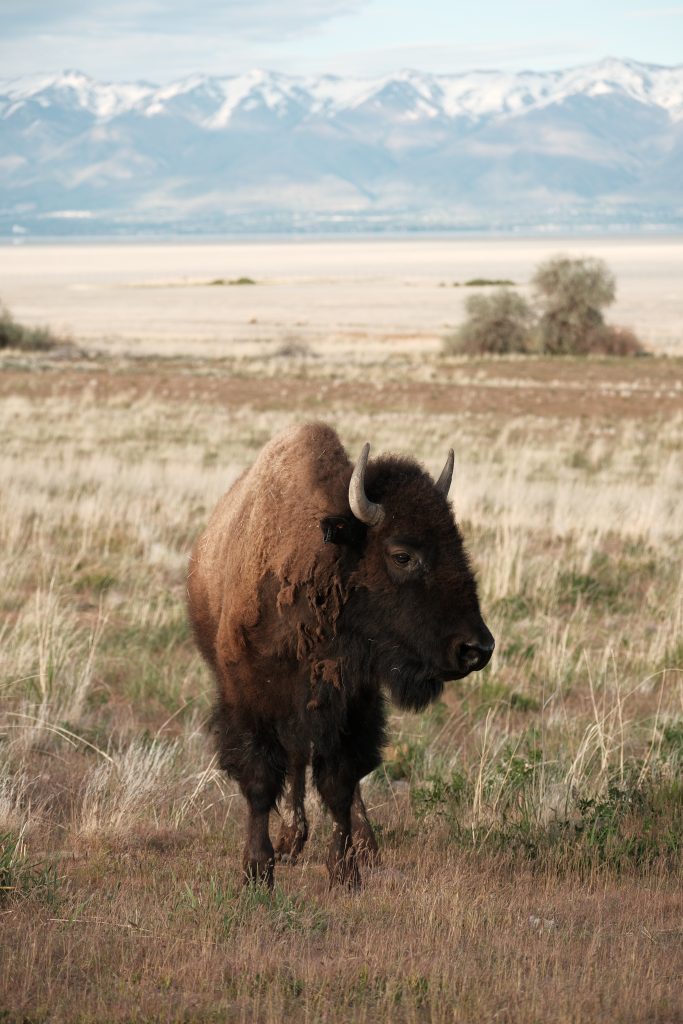
This is one of Utah’s hidden gems and a place like no other. Located just 1 to 1.5 hours northeast of Salt Lake City, the island lies in the Great Salt Lake and the salt flats and mineral-rich colours transform the landscape into soft pastel hues and reflect the surrounding mountains. On top of this, the island is home to an abundance of wildlife. Its most famous residents is a herd of 500 bison that roam freely across the island. In addition, coyotes, pronghorn, big horn sheep and hundreds of bird species make the island home.
It’s not as well-known as Utah’s national parks, but Antelope Island is worth a visit especially if you are a wildlife lover or photographer. You can spend the day here or even see the island in just a morning or afternoon. If you do plan to come here, we recommend spending the previous night in Syracuse, which lies just off the island.
While the park isn’t included in the America the Beautiful Pass, entrance is a reasonable $20 per vehicle for a full day of exploring.

If you have any questions about planning this trip, feel free to drop a comment below. We’d love to help you craft the perfect itinerary.