This unforgettable Japan winter itinerary will take you on a 15 day journey from iconic destinations like Tokyo, Mount Fuji and Kyoto to lesser-known treasures in Nagano Prefecture and the beautiful island of Hokkaido. Along the way you’ll watch snow monkeys relaxing in natural hot springs, soak in soothing onsens, stroll through historic post towns and enjoy world-class skiing. The itinerary can be adjusted to fit your schedule, so you can explore Japan at your own pace. If you’re visiting during another season, many of these destinations shine year-round with their own seasonal charm.
Japan winter itinerary overview
Japan had been at the top our list of places we wanted to visit for a long time and it is now firmly back at the top of our list of places we want to return to. It’s truly a special and unique country. From the way it embraces the future while preserving its past, to the best food you will ever eat no matter if it’s a Michelin star restaurant or a hole in the wall, and the phenomenon of Kawaii culture that celebrates cuteness for absolutely everything. We fell in love with Japan.
Travelling to Japan in winter offers a quieter, more atmospheric way to experience the country, with fewer crowds at major sights and a strong seasonal character. Snow transforms regions like Hokkaido, the Japanese Alps, and Nagano, while cities such as Tokyo, Kyoto, and Osaka remain easily accessible with cool temperatures and occasional snowfall.
Getting around is easy thanks to Japan’s efficient trains, buses, and well-equipped roads, though you may want a Japan Rail Pass for longer rail journeys. Cultural events like New Year celebrations (Shogatsu) and Setsubun add festive local experiences, while practical tips like respecting local etiquette, mastering onsen etiquette, and using services such as Takkyubin luggage delivery can make your trip smoother.
In this guide we’ve included more detailed information on what to expect during the season, how to get around, must-try winter activities to make your winter adventure unforgettable and essential practical tips to know before you visit Japan.
Japan winter itinerary route
This circular Japan itinerary begins in Tokyo, before travelling by train to Mount Fuji and the surrounding Fuji Five Lakes region. From there, the route continues north by car to Shibu Onsen, a historic hot spring town famous for its traditional ryokan and snow monkey park.
The journey then turns south through the scenic Kiso Valley, where you can explore beautifully preserved post towns along the Nakasendo Trail. From Nakatsugawa, it’s easy to catch a train to Kyoto and Nara, Japan’s cultural heart and home to temples, shrines, and historic neighbourhoods.
From nearby Osaka, take a short domestic flight to Sapporo on the northern island of Hokkaido, for incredible skiing. Finally, fly back to Tokyo to complete the loop and end your trip.

Day 1 and 2: Tokyo
Kick off your first day of this Japan winter itinerary with a full day exploring the eclectic sights of Tokyo. Begin at the tranquil Meiji Jingu, a Shinto shrine tucked within a peaceful garden and dense forest that feels worlds away from the city chaos. Spend about an hour strolling through the shrine complex.
From Meiji Jingu, walk south to Harajuku, a lively neighbourhood famous for its art, fashion, and quirky animal cafes. Check out the vintage clothing and cosplay stores, as well as the more unique shops that are packed with capsule vending machines. Then head to a café for a coffee and a cuddle with a micro pig. There are animal cafes all over Tokyo, nearly every street seemed to have a cat cafe, but in Harajuku you can find cafes that host a range of animals including owls, capybaras, hedgehogs and otters. Do a bit of research before choosing where to go to make sure the animals are treated well.
Next, make your way to Shibuya, home of the iconic Shibuya Scramble Crossing, where the energy of Tokyo truly comes alive.
As the evening nears, hop on the Yamanote Line to Shinjuku, a vibrant district aglow with neon lights. For dinner, wander to Omoide Yokocho, where tiny alleyways are lined with cozy, casual eateries serving up delicious local dishes. Later, head to Golden-Gai, a maze of narrow streets where intimate bars and taverns open their doors, making it the perfect spot to cap off our first day in Japan.
Night 1: Tokyo


Spend your second day of your Japan winter itinerary further soaking up the vibrant sights, sounds and tastes of Tokyo. Start with an early morning trip to Tsukiji Outer Market to indulge in a variety of breakfast treats including the best fluffy egg omelette (Tamago) and strawberry mochi we’ve ever had and to this day are still talking about. Arriving before 8am to the market will give you a chance to explore the stalls before the main crowds arrive.
Next, take the subway and head to Asakusa, a district known for its “old Tokyo” atmosphere and probably our favourite area in Tokyo. Wander along Nakamise-dori Street, lined with traditional craft shops and street food vendors where you can pick up souvenirs. Just steps away, explore Senso-ji Temple, Tokyo’s oldest and most revered Buddhist temple with beautiful Japanese gardens.
From Asakusa, walk to Kappabashi, Tokyo’s kitchenware mecca, where you can brows shops selling traditional Japanese tools, including renowned knives and cookware that make excellent gifts or keepsakes.
Later that day, take the subway to Akihabara. This is Tokyo’s futuristic shopping district famous for electronics, anime and manga. Explore the streets and wandered into some of the multi-level storey buildings, where each floor contains something different – vintage arcade games, comic book collectables, cosplay and photo booths. Honestly, you could spend hours in one of these buildings.
In the evening, head to Roppongi, an upscale district known for its dining and nightlife scene. Treat yourselves to a memorable sushi dinner at one of the area’s many stylish restaurants.
Night 2: Tokyo


Day 3: Mount Fuji and Fuji Five Lakes
Start day 3 of your Japan winter itinerary bright and early by taking the Chuo Line train from Shinjuku Station to Otsuki Station, on the outskirts of Tokyo. This is where your road trip will begin. Pick up a rental car right across from the station at Toyota Rent-A-Car and drive towards Mount Fuji.
(This itinerary includes a four-day car rental with a different drop-off location. If you don’t hold a Japanese driver’s license, make sure to bring an international driver’s permit. And if you’re traveling in winter, remember to request winter tyres as snowy roads are common in this area. The reason we recommend hiring a car from Otsuki Station is because it’s located in Yamanashi Prefecture rather than Tokyo. In winter, rental cars in Yamanashi typically come equipped with snow tyres as standard, while rentals from Tokyo, even in convenient locations like Shinjuku, risk coming without winter tyres).
Spend the rest of the day exploring the Fuji Five Lakes area stopping at Lake Kawaguchi, Saiko, Shoji, and Motosu. Each lake offers its own unique perspective of the impressive Mount Fuji. Enjoy the freedom of exploring at your own pace with the car, capturing views of Fuji from every angle.
Night 3: Kawaguchiko.

Day 4: Mount Fuji and snow monkeys
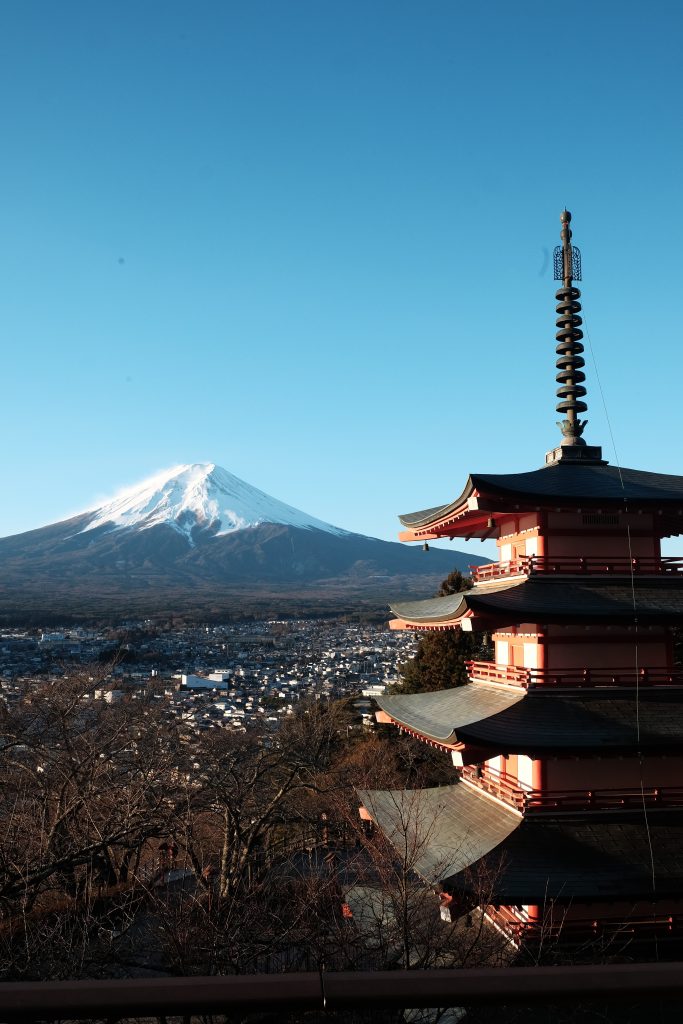
Get up at sunrise for a quick 10-minute drive from Kawaguchiko to Chureito Pagoda. Perched on a mountainside, this five-storied pagoda offers one of the most iconic views in Japan, with Mount Fuji towering majestically behind and Fujiyoshida City spread out below. Arriving early ensures a peaceful visit, as the area fills up quickly by 8am.
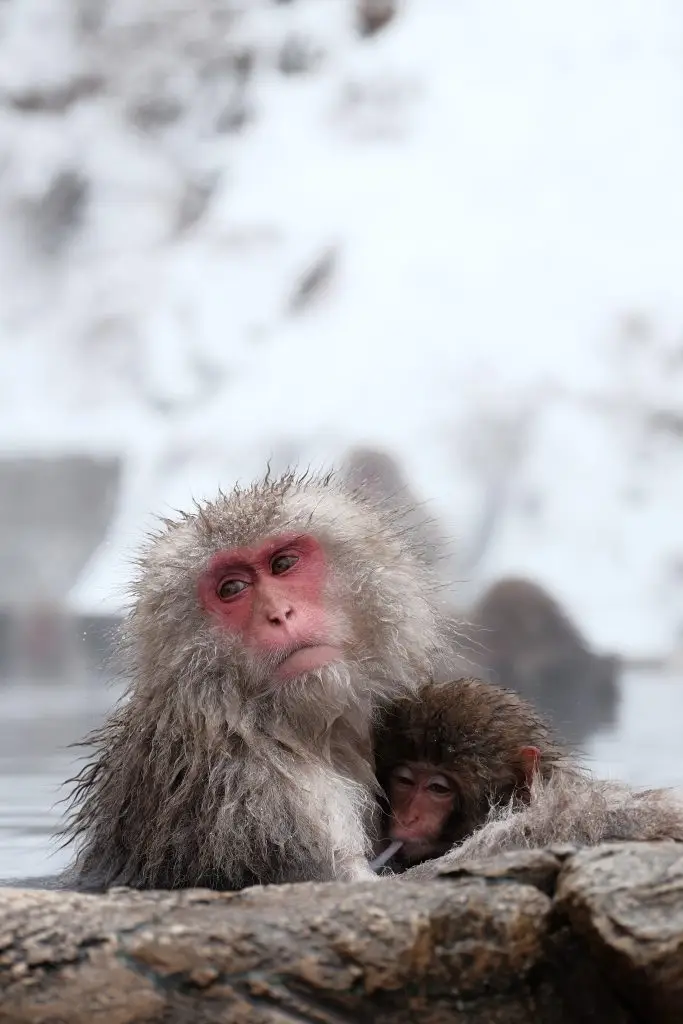
Once you’ve soaked up the stunning views, set off on a scenic 3-3.5 hour drive to Shibu Onsen in Nagano Prefecture. This charming hot spring town has been a haven for relaxation for over 1,300 years and is also home to the famous snow monkeys. After checking into your hotel in Shibu Onsen, make your way to the monkeys located on the outskirts of town in Jigokudani Monkey Park. Spend the entire afternoon watching the snow monkeys keeping warm in the park’s thermal pools. This was one of our favourite parts of visiting Japan in winter. If you want to find out more about visiting the snow monkeys, we’ve put together this guide that covers how to get there, what to expect and more.
To end your day, and to warm up after spending hours in the freezing cold with the monkeys, take a blissful soak in an onsen at your hotel. Shibu Onsen also has a public onsen which can be used by visitors.
Night 4: Shibu Onsen
Day 5: Togakushi Shrine and Shibu Onsen
This morning set out for an hour’s drive to the mystical Togakushi Shrine, nestled deep in nature and the forested mountains. Togakushi Shrine is made up of three distinct shrines – lower, middle, and upper – all hidden among towering ancient cedars that lend the area a peaceful, almost magical feel. If you’re visiting in winter, be prepared as the paths are often blanketed in deep snow, so waterproof boots are a must for this adventure.
After exploring the shrines, warm up with a lunch at one of the nearby restaurants famous for Togakushi’s specialty: soba noodles.
In the afternoon, return to Shibu Onsen. Stroll through this historic thermal town, admiring the traditional wooden buildings and quaint craft shops that line its narrow streets and picke up a few more souvenirs.
That evening take the opportunity to relax again in an onsen.
Night 5: Shibu Onsen


Day 6: Matsumoto Castle and Kiso Valley
On day 6 of your Japan winter itinerary, travel back south through Nagano Prefecture towards Kyoto, stopping at many places along the way. Your first stop, just over an hour away from Shibu Onsen, is Matsumoto Castle. This is a magnificent structure recognised as a ‘national treasure of Japan.’ As the oldest surviving castle tower in the country, its black-and-white façade set against the mountains is a sight you won’t forget. You can visit the grounds and inside of the castle for a fee, or admire it from the outside.
After exploring Matsumoto Castle, hit the road toward the enchanting Kiso Valley. Here, the Edo Period lives on in the traditional post towns of Narai-juku, Tsumago and Magome. Each town feels like stepping back in time, with wooden buildings housing cozy cafes, charming restaurants, and artisan shops offering unique local crafts. This is the perfect place to wander, sip on tea, and pick up unique souvenirs that capture the spirit of old Japan. We loved exploring these old towns.
Once you’ve soaked up the valley’s beauty, drive onward to Nakatsugawa, where you can drop off the car and hop on a train to Nagoya. At Nagoya, transfer to the sleek shinkansen (bullet train) bound for Kyoto. Before getting on, grab a bento box at Nagoya Station for dinner. Bento boxes are a must try when you’re in Japan – they are basically lunch boxes filled with lots of different treats.
The train takes just over 30 minutes to reach Kyoto.
Night 6: Kyoto


Day 7: Kyoto
For your first full day in Kyoto, wake up early to enjoy the city’s treasures before the crowds arrive. First, head to Gion, Kyoto’s renowned geisha district and stroll down the narrow streets lined with traditional wooden machiya houses.
From Gion, make your way to Kiyomizu-dera Temple, a breathtaking Buddhist temple perched on a hillside. The temple’s massive wooden terrace offers sweeping views of Kyoto.
Next, catch an Uber to Kinkaku-ji, the famous Golden Pavilion. This zen temple is covered in gold leaf and surrounded by tranquil gardens with a reflecting pond that glows in the early light.
From here, get another Uber to Adashino Nenbutsuji Temple. This hidden gem is home to 8,000 stone statues, each dedicated to a departed soul without family. The temple’s quiet grounds and haunting beauty offer a contemplative moment within Kyoto’s busier sights.
Continue on foot through the quiet residential streets and on to the enchanting Arashiyama Bamboo Grove, where paths wind through towering bamboo stalks.
Late afternoon, visit Nishiki Market, Kyoto’s vibrant street-food market, where you can sample an array of local delights, from fresh seafood to sweets and savoury bites. If you are looking for another dinner option, close by is Pontocho Alley. This is a lively, narrow street brimming with restaurants and bars. This atmospheric alley, lined with intimate dining spots, offers everything from traditional Japanese dishes to modern fusion cuisine.
Night 7: Kyoto


Day 8: Nara and Kyoto
An early start at Kyoto Station, head for an enchanting half-day trip to Nara, Japan’s ancient capital. In Nara, visit the grounds of Todai-ji Temple, where a 15-meter bronze Buddha sits majestically within a grand wooden hall. The temple’s peaceful aura is mesmerizing, but the deer are what bring thousands of tourists to Nara. These charming creatures roam freely around Todai-ji and Nara Park, often bowing politely in exchange for special deer crackers, sold by local vendors. Feeding these somewhat gentle (some also bite), bowing animals is a unique experience.
At midday, head back to Kyoto for a visit to Fushimi Inari Shrine, one of Japan’s most iconic sights. This shrine dedicated to the Shinto god of rice, Inari, is known for its thousands of striking vermilion torii gates that form a picturesque pathway through the forested trails of Mount Inari. Wander the paths under the gates and take in the atmosphere of this sacred mountain.
Later that afternoon, treat yourselves to a traditional Japanese tea ceremony.
That evening catch t a bus to Osaka airport for a comfortable night’s rest ahead of an early flight to Sapporo.
Night 8: Kyoto or near Osaka airport


Day 9-14: Niseko
For days 9 to 14, head to Japan’s northern island: Hokkaido. You can fly from Osaka to the domestic terminal at Sapporo, then take a pre-booked bus straight to your ski resort.
On our trip to Japan, we chose to stay at Niseko-Annupuri for five full days of skiing, and it was undoubtedly the best skiing experience we’ve ever had. Niseko-Annupuri, part of the world-famous Niseko resort area, is known for its stunning views of Mount Yotei and consistently excellent powder snow. The resort offers a mix of terrain suitable for all levels, from gentle slopes for beginners to thrilling runs for advanced skiers.
Annupuri is particularly famous for its laid-back atmosphere compared to other parts of Niseko, making it a perfect spot for those seeking a quieter and more relaxed vibe after a day on the slopes. The resort is less crowded, giving you more space to enjoy the slopes. With that said, the other parts of Niseko are readily accessed via chair lifts.
Spend your days skiing ridiculous amounts of fresh powder, stopping every now and then for a warm bowl of ramen or other delicious food in the mountain huts.
Night 9-15: Niseko

Day 15: Tokyo
Leave Hokkaido and take a flight back to Tokyo, where you have one final evening to enjoy the city again before the end of your Japan winter itinerary.


