For a short window in spring, the iconic Going-to-the Sun Road Glacier National Park is open exclusively to cyclists and hikers. No cars allowed. This creates a quieter, safer and truly unique opportunity to explore one of the most beautiful roads in the United States. You don’t need to be an expert cyclist to enjoy this rise. The road can be tackled at a leisurely pace, with plenty of opportunities to stop, take photos and soak in the views. In this guide, we’ve compiled everything you need to know about cycling the Going-to-the-Sun Road, including when to go, where to start, safety tips and what to pack.
What is the Going-to-the-Sun Road?
The Going-to-the-Sun Road is a spectacular 50-mile scenic road that traverses Glacier National Park in Montana, crossing the Continental Divide at Logan Pass. The road showcases dramatic mountain scenery including glaciers, alpine valleys, waterfalls, mountain peaks and wildflowers.
As a highlight of the park and one of the most famous drives in the US, the road attracts hundreds of thousands of visitors each summer. So much so, that a timed entry pass for vehicles is required for the west side of the road from 7am to 3pm between June 13 through September 28. This makes the spring cycling window even more special.
When is the Going-to-the-Sun Road open for cyclists?
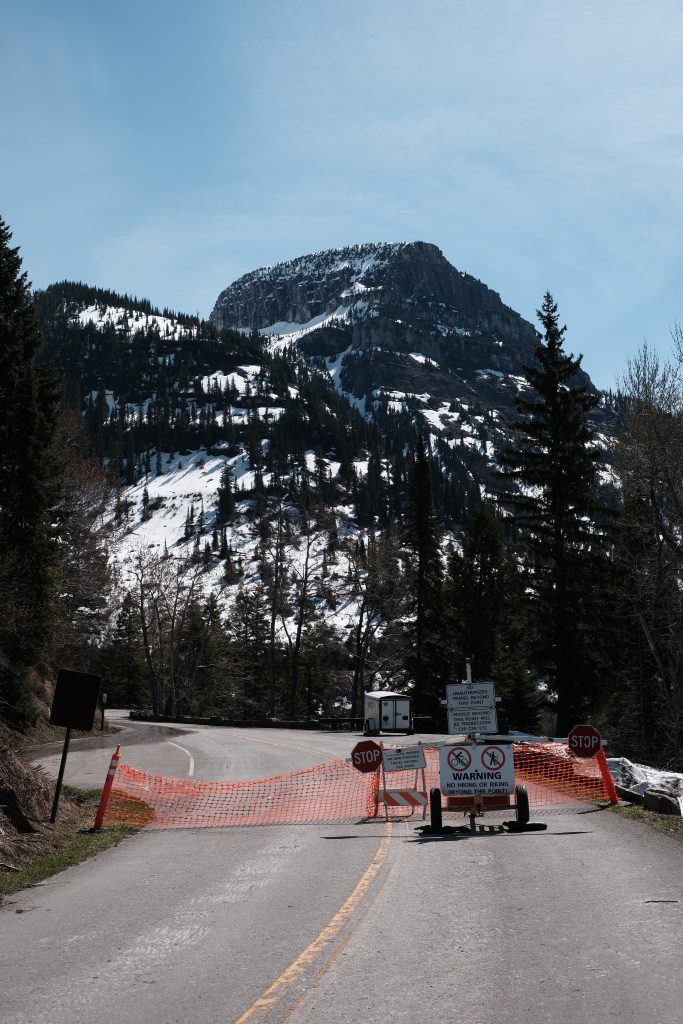
Every spring, before the road fully opens to vehicles, cyclists and hikers are given access as snowplows gradually clear winter snowfall. As each section of the road is plowed, it becomes open for non-motorised use. Cyclists are not permitted to go beyond the active plowing zone, which is clearly marked with signage. Access typically increases week by week as plowing progresses toward Logan Pass.
The road is typically open to cyclists only from early May to late June. You can check the road status on this national parks web page.
While the road remains open to cyclists throughout summer and until it closes again for winter typically in mid-October, once vehicles are allowed. Cyclists mush share the road with traffic. Due to narrow lanes, sheer drop-offs and rock walls, this is a much less enjoyable experience than cycling during the car-free spring window.
Days open to cyclists:
A key thing to note is that the road is only open for use by cyclists on Fridays, Saturdays and Sundays during the spring car-free period.
Is there a fee to cycle the Going-to-the-Sun Road?
Yes, like all US National Parks, Glacier National Park charges an entrance fee.
- If you enter the park in a motorised vehicle (even if you plan to cycle the Going-to-the-Sun Road), the entrance pass costs $35. This covers both the vehicle and all passengers for up to 7 days.
- If you enter the park on a bicycle or on foot, the pass costs $20 per person, lasting up to 7 days.
- Alternatively, the America the Beautiful Annual Pass covers entrance to all national parks for a year for $80. Well worth it if you plan on visiting more national parks.
Passes can be purchased at park gates.
Important update: As of January 1st 2026, all non-US residents must pay a $100 fee in addition to the standard entrance fee or purchase a America the Beautiful Non-Resident Pass for $250.00.
Overview of the cycling route
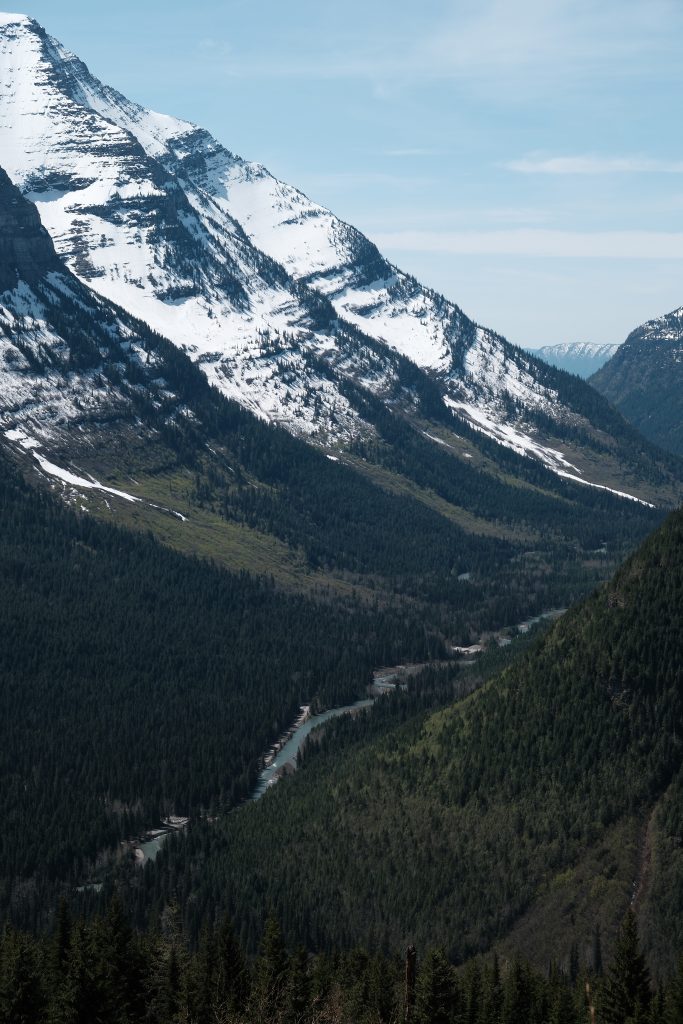
The Going-to-the-Sun Road begins near West Glacier, following the southern shoreline of Lake McDonald. The road gradually climbs alongside McDonald Creek for some time before the steeper incline up to The Loop, a switchback carved into the mountainside.
From The Loop, the road continues to climb to Logan Pass, the highest point on the route. From there, the road descends towards the east side of Glacier National Park, ending near St. Mary Lake.
Where to start cycling:
Your starting point depends on how much of the road is open to vehicles at the time of your visit.
Many people begin at Avalanche Lake Trailhead once accessible by car, as it skips a long section between there and Lake McDonald. You can park your vehicle at the Trailhead, although parking is limited so arrive early.
Earlier in the season the road may not be open all the way to Avalanche Lake Trailhead, in which case a good option to start is at Lake McDonald Lodge.
Shuttles are also available to transport cyclists and their bikes from Apgar Visitor Centre to the point where the road is restricted to vehicles. More information on the shuttle service below in the logistics section.
Where to end:
Your turnaround point really depends on how far the road has been plowed. You may only make it to ‘The Loop’ or Logan Pass, before you have to turn back. Or you may make it to the end at St. Mary Lake (usually later in the season).
The National Park Service provides weekly updates on road status and plowing progress (updates Thursdays). Check this national park webpage for updates. In our experience these updates weren’t always accurate – we were able to drive and cycle slightly further than posted – so use them as a general guide rather than an absolute limit.
Ride distances and elevation gain:
From the road closure on the west side at the Lake McDonald Lodge:
- Avalanche Creek – 5.5 mi; 219 ft
- the West Tunnel – 12.7 mi; 1,030 ft
- the Loop – 13.3 mi; 1,100 ft
- Big Bend – 18 mi; 2,545 ft
- Logan Pass – 21 mi; 3,427 ft
From the road closure on the west side at Avalanche Creek:
- the West Tunnel – 7.2 mi; 811 ft
- the Loop – 7.8 mi; 881 ft
- Big Bend – 12.5 mi; 2,326 ft
- Logan Pass – 15.5 mi; 3,208 ft
From the road closure on the east side at Rising Sun:
- Sun Point – 3.5 mi; 181 ft
- Sunrift Gorge – 4.2 mi; 223 ft
- St. Mary Falls Trailhead – 4.7 mi; 295 ft
- Jackson Glacier Overlook – 6.9 mi; 846 ft
- Siyeh Bend – 8.9 mi; 1,421 ft
- Lunch Creek – 10.9 mi; 2,110 ft
- Logan Pass – 11.5 mi; 2,313 ft
Difficulty level
You might be wondering whether you need to be extremely fit or an experience cyclist.
The short answer is, not necessarily.
As long as you’re comfortable riding a bike, understand basic road rules and have a reasonable level of fitness, this ride is achievable. That said the elevation gain is significant – cycling from West Glacier to Logan Pass involves over 3,400 feet of climbing and there are dangers including rockfall and snowmelt.
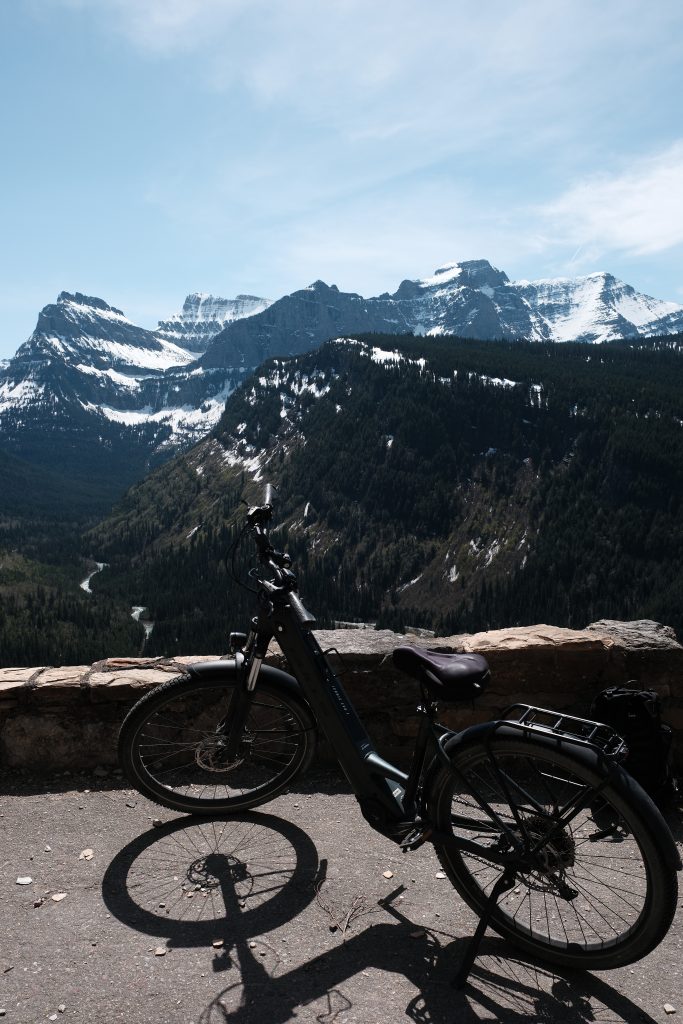
If you’re not used to sustained uphill riding, an e-bike is an excellent option and allows you to enjoy the scenery without exhaustion.
Safety rules and guidelines
Besides fitness, other safety measures should be considered before cycling the Going-to-the-Sun Road.
Spring cycling rules on the Going-to-the-Sun Road:
- Bikes are allowed only on paved roads and designated paths.
- Do not ride beyond posted closures (fines up to a $5,000 and up to 6 months in jail).
- Stay in the right lane. Even though there are no vehicles on the road, collisions do happen between cyclists.
- Control your speed, especially on descents.
- Use hand signals to communicate with other cyclists.
- E-bikes must be under 750 watts and pedal-assist only.
- Bring a headlamp and reflectors if biking in the early morning, late afternoon, evening or during low-visibility.
- Never leave food unattended, including in panniers and backpacks.
- Check tire pressure before you set out and make sure you have the necessary tools for basic repairs.
Road and weather conditions:
Mountain weather is highly variable, especially in spring. Conditions can change rapidly from warm sunshine to snow and freezing temperatures.
Snowmelt, wet pavement, and downhill spray can quickly chill you. Higher elevations near Logan Pass can feel winter-like even when the valley is warm.
Avalanche risk is generally low below The Loop, and the park actively monitors conditions and restricts access if necessary. Rockfalls, however, are possible and can pose hazards both from above and on the road surface.
Wildlife:
One of the best things about Glacier National Park besides its gorgeous views, is the abundance of wildlife. Bears are common at all elevations and sightings have been reported along the road. Carry bear spray, never approach them and be sure to give them plenty of space to move away from you.
Logistics for cycling the Going-to-the-Sun Road
You can use your own bike to cycle the Going-to-the-Sun Road or if you do not have your own, there are a few different places to rent one.
Where to rent a bike?
- Glacier Outfitters at Apgar Village (within Glacier National Park) offer both standard and e-bikes.
- Sky Eco Rentals on highway 2 (outside of Glacier National Park) offer both standardl and e-bikes, plus bike racks to fit to your car.
Hiker-biker Shuttle service
As mentioned, shuttles are available to transport cyclists and their bikes from Apgar Visitor Centre to the point where the road is restricted to vehicles.
Hiker-biker shuttle service is typically offered weekends only beginning on Mother’s Day weekend through the last weekend in June or until the day the Going-to-the-Sun Road fully opens, whichever comes first. If the Going-to-the-Sun Road fully opens prior to June 29, the hiker-biker shuttle service will no longer be offered.
Hiker-biker shuttle details
- 9 am to 4 pm on weekends only during hiker-biker season.
- Shuttles arrive at designated stops approximately every 15–30 minutes.
- The hiker-biker shuttle stops at Apgar Visitor Center, Lake McDonald Lodge, and Avalanche Creek only.
- Shuttles operate on a first-come, first-served basis.
- Shuttles board ~15 passengers and are equipped with bike trailers.
- Shuttles are unable to accommodate bikes with tires wider than three inches and/or have extended or full front fenders.
Packing list for cycling the Going-to-the-Sun Road
We recommend bringing:
- Packed lunch, snacks and water
- Headtorch or headlamp
- Raincoat
- Lightweight insulated layer
- Quick dry pants and top
- Balaclava
- Gloves
We hope this guide was helpful. If you have any other questions, please let us know in the comments box below.