Olympic National Park is unlike anywhere else. Few places in the world offer this level of diversity in such a compact area, where wild beaches, moss-covered forests and alpine ridgelines coexist within a single park. This Olympic National Park, Washington itinerary is designed to maximise your time, ensuring you hit all the must-see highlights while still allowing space to soak in the atmosphere and natural beauty.
Check out our other US National Parks guides and itineraries:
Olympic national park, Washington overview
Located in the state of Washington, Olympic National Park spans nearly one million acres and protects an extraordinary range of ecosystems. From the dramatic Pacific coastline to glacier-capped peaks in the Olympic Mountains, the park is best known for its biodiversity.
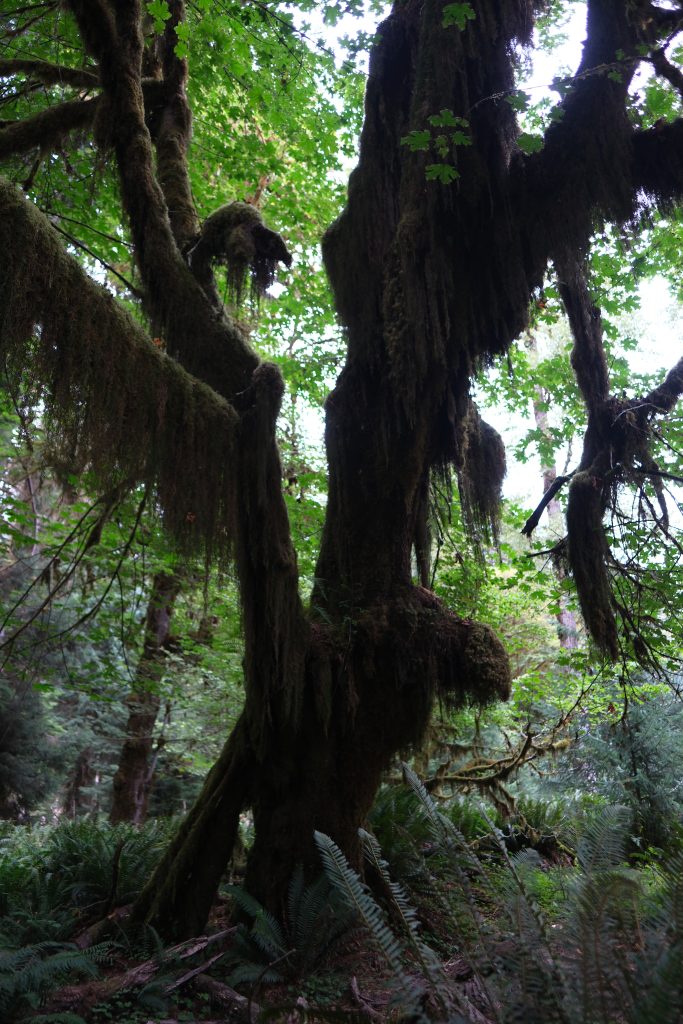
One of its most iconic features is the Hoh Rainforest, one of the largest temperate rainforests in the United States where towering trees are draped in thick green moss, creating a truly otherworldly atmosphere.
Olympic National Park itinerary route overview
This Olympic National Park, Washington itinerary follows a loop through the park’s most iconic regions, starting along the wild west coast before heading inland to the rainforest and finishing in the alpine landscapes of Hurricane Ridge.
Over two days, you’ll experience:
- Rugged Pacific beaches with sea stacks and tide pools
- Ancient temperate rainforest trails
- Scenic mountain viewpoints and alpine hikes
Getting to and around Olympic National Park
The best way to explore this Olympic National Park, Washington itinerary is by car.
Most visitors access the park from Seattle, which is around a 2.5–3 hour drive depending on your route. From Seattle, you can either take a ferry across Puget Sound or drive south and loop around.
You can also reach the area from Canada, by taking the retro Coho passenger and vehicle ferry, run by Black Ball Ferry Line, from Victoria to Port Angeles.
Distances within the park are larger than they appear on a map, and roads are often winding, so allow extra time for travel between locations.
When to visit Olympic National Park
The best time to follow this Olympic National Park, Washington itinerary is between late spring and early autumn (May–October).
- Summer (June–September): Best weather, ideal for hiking and clear views at Hurricane Ridge
- Spring & Fall: Fewer crowds, lush rainforest conditions, occasional rain
- Winter: Limited access to higher elevations like Hurricane Ridge due to snow
Olympic National Park entry and fees
You’ll need a pass to enter Olympic National Park.
- Standard entry: $35 per vehicle (valid for 7 days)
- Recommended: America the Beautiful Pass – $80/year (covers all US national parks)
Since many travellers combine this with other parks, this pass offers excellent value.
Important update:
As of January 1st 2026, all non-US residents must pay a $100 fee in addition to the standard entrance fee or purchase a America the Beautiful Non-Resident Pass for $250.00.
Day 1: Ruby Beach, Hoh Rainforest, Forks & Rialto Beach
On day 1 of your Olympic National Park, Washington itinerary, you’ll explore the park’s rugged Pacific coastline before heading inland to one of the most iconic temperate rainforests in the United States.
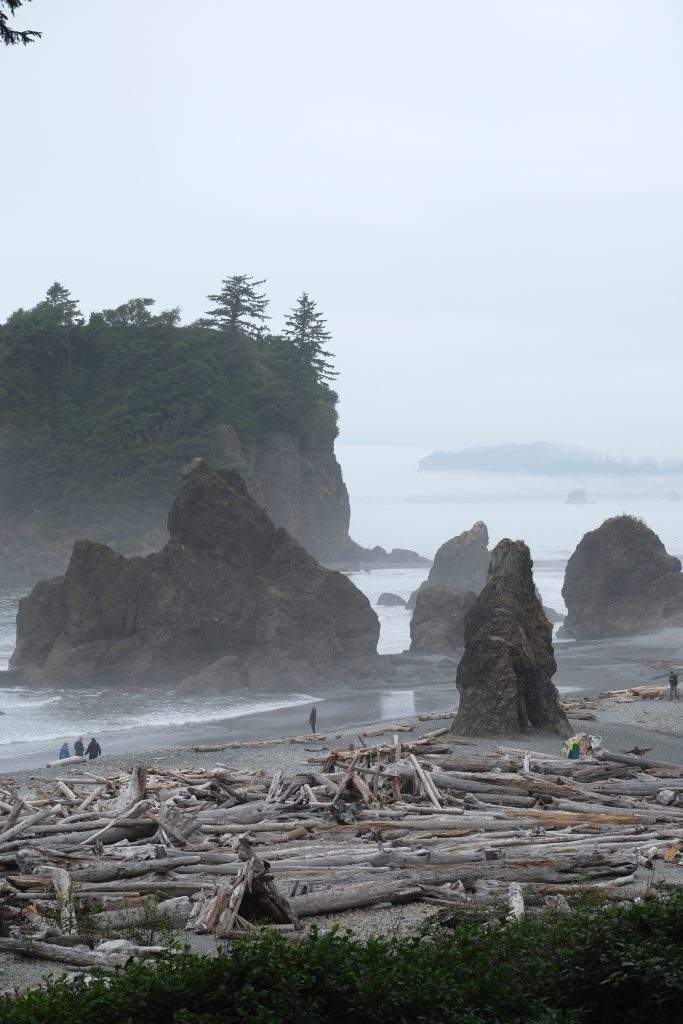
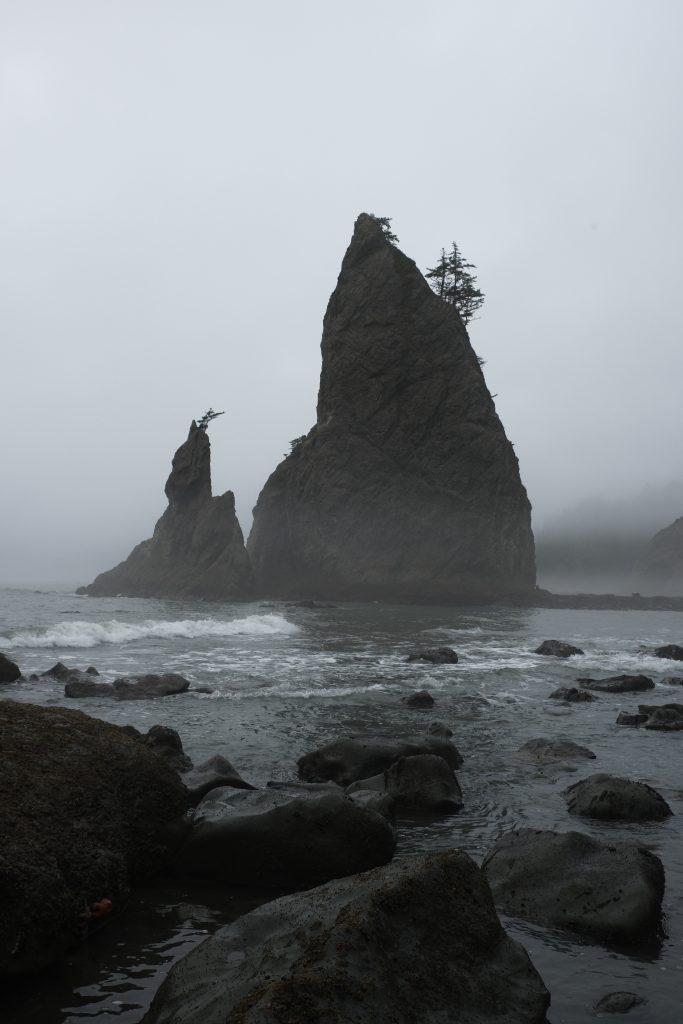
Begin your morning at Ruby Beach, located along the wild western edge of Olympic National Park. This stretch of coastline is everything you imagine when you think of the Pacific Northwest – moody, dramatic, and incredibly beautiful. Towering sea stacks rise out of the ocean just offshore, while weathered driftwood and dense evergreen forest frame the beach. A short trail from the parking area leads down to the shoreline, where you can spend time walking along the sand, weaving between rock formations, and taking in the ever-changing coastal scenery. On calmer days, keep an eye out for wildlife such as seabirds, otters, and even eagles overhead.
After soaking in the coastal views, make your way inland to the Hoh Rainforest, one of the highlights of any Olympic National Park, Washington itinerary. This lush, moss-draped forest feels almost prehistoric. Towering trees are covered in layers of vibrant green moss and the air is thick with moisture, giving the entire area a magical atmosphere. Start with the famous Hall of Mosses Trail, a short loop that showcases the rainforest at its most iconic, before venturing onto the Hoh River Trail if you’re looking for a longer, quieter walk through the forest. There’s also a visitor centre where you can learn more about the ecosystem and join one of the guided forest walks.
From the rainforest, it’s just under an hour’s drive to the small town of Forks. While modest in size, Forks is a convenient place to stop for lunch or a coffee break. Once a logging town, it’s now best known as the setting for the Twilight series, and you’ll find a handful of themed shops alongside casual cafes, grocery stores, and drive-through coffee spots.
Finish your day back on the coast at Rialto Beach. This beach is wilder and more rugged than Ruby Beach, with massive driftwood logs scattered along the shore and powerful waves crashing against sea stacks. From the parking area, follow the beach north, walking past the rock formations and along the crashing waves. If you time your visit with low tide, continue to the famous “Hole-in-the-Wall,” a natural rock arch that can be reached after around a 45-minute walk. Along the way, you’ll also find colourful tide pools teeming with marine life. As the day winds down, this is an incredible place to watch the light shift across the ocean before heading to your accommodation for the night.
For accommodation for the night, there are a number of variously priced options including hotels, motels, Airbnbs and cabins. Stay near Forks, La Push, or along the coast for easy access to day 2 locations.
Day 2: Sol Duc Valley & Hurricane Ridge
Day 2 of your Olympic National Park, Washington itinerary takes you away from the coastline and into the park’s lush interior and alpine landscapes, showcasing a completely different side of Olympic National Park.
Start your morning in the Sol Duc Valley with a stop at Salmon Cascades. If you’re visiting between late summer and early autumn, this is one of the best places in the park to witness salmon making their way upstream to spawn. Watching them repeatedly attempt to leap up the cascades is both fascinating and a reminder of the powerful natural cycles that define this region.
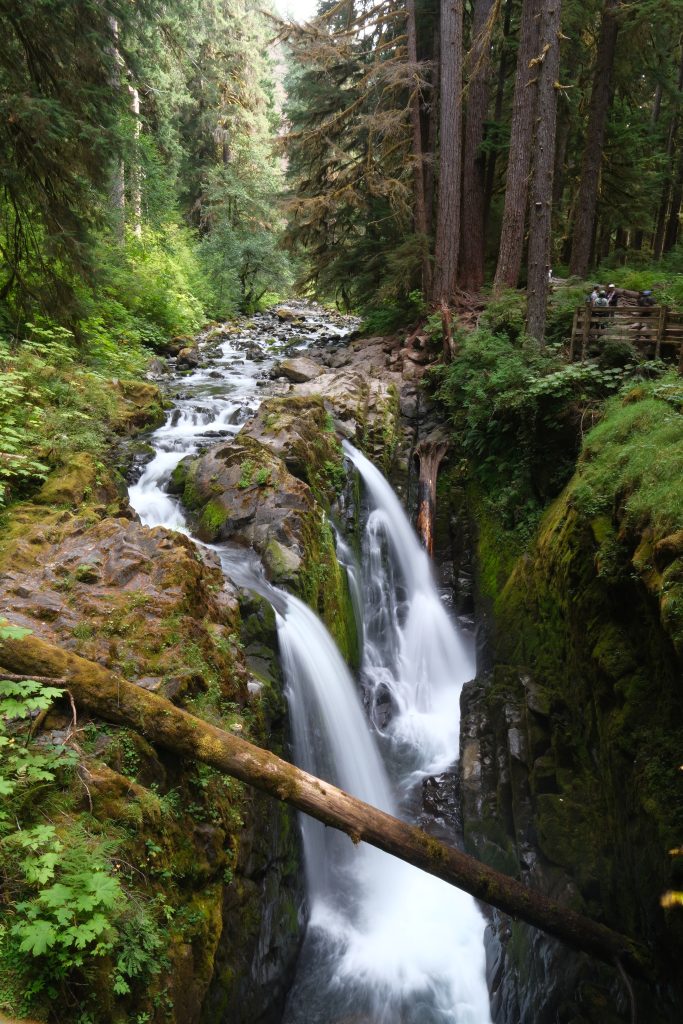
From here, continue deeper into the valley to reach Sol Duc Falls. The trail to the falls is an easy and scenic walk through old-growth forest, where towering trees and the sound of rushing water accompany you along the way. After around 20–30 minutes, you’ll reach a viewing platform overlooking the falls, where water funnels dramatically through a narrow gorge before cascading below. It’s one of the most photogenic spots in the park and well worth the short hike.
After exploring Sol Duc, begin the drive toward Hurricane Ridge, one of the most breathtaking viewpoints in this Olympic National Park, Washington itinerary. The journey takes around 1.5 hours and is a highlight in itself, as the landscape gradually transforms from dense forest to open alpine terrain. Before heading up, you may want to stop at the Olympic National Park Visitor Centre to pick up maps or check conditions.
The road to Hurricane Ridge winds steadily uphill, offering glimpses of the surrounding mountains as you climb higher. Once at the top, park near the trailhead and take your time exploring the area. One of the best ways to experience the landscape is by hiking the Hurricane Hill Trail, a gradual ascent that rewards you with sweeping panoramic views over the Olympic Mountains and, on clear days, all the way to the Strait of Juan de Fuca. In summer, the hillsides are often dotted with wildflowers, while wildlife such as deer and marmots can sometimes be spotted along the trail.
What makes this final stop so memorable is the contrast—it feels worlds away from the misty coastline and rainforest you explored the day before. This diversity is what makes following an Olympic National Park, Washington itinerary so special, allowing you to experience multiple ecosystems in just a couple of days.
As your trip comes to an end, take in the views one last time before beginning your journey onward, having experienced some of the very best landscapes Olympic National Park has to offer.

If you have any questions about planning this trip, feel free to drop a comment below. We’d love to help you craft the perfect itinerary.